
If the law of assumption has a face, it’s this one. Neville Lancelot Goddard, known simply as Neville, was born in Barbados on 19 February 1905, the fourth of ten children. He didn’t set out to be a spiritual teacher. He set out to be a dancer, which is a very different career, though both involve standing in front of people and hoping for the best.
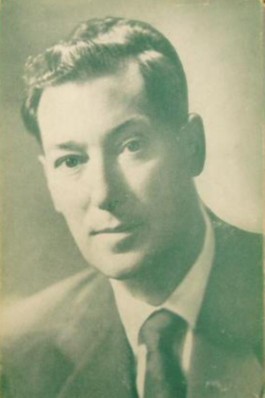
Neville Goddard, around 1939. Photo via Wikimedia Commons.
At seventeen he moved to New York to study drama, and by the mid-1920s he was dancing professionally and touring in Europe. Somewhere along the way his interest turned to metaphysics. Between 1929 and 1936 he studied with a teacher he called Abdullah, who introduced him to Hebrew and a mystical way of reading the Bible.
He began lecturing in 1938 and kept going for roughly three decades, in New York, San Francisco and later Los Angeles. In the 1950s he even had a television series, which means he was doing Sunday afternoon spirituality long before it was fashionable.
So what did he actually teach? His central idea was that imagination is the creative power in our lives, and that we change our circumstances by assuming the feeling of the wish fulfilled. In Your Faith Is Your Fortune he wrote that an assumption, though false, if persisted in, will harden into fact. That one sentence is more or less the whole law of assumption, which tells you how much a good sentence can do.
He also read the Bible in an unusual way. To Neville it wasn’t mainly a history book but a psychological drama taking place inside each of us, with its characters standing for states of mind. You don’t have to agree with him to see why it made his lectures memorable.
He wrote around fourteen books, including Feeling Is the Secret in 1944, and gave hundreds of lectures. He died in Los Angeles on 1 October 1972, aged 67. His influence has outlasted him. Rhonda Byrne, who wrote The Secret, and Wayne Dyer have both said he shaped their thinking.
Of course, Neville’s work is a spiritual teaching, not a laboratory result, and you’re free to weigh it for yourself. I’d only say that an idea that keeps turning up for nearly a century deserves at least a polite hearing.
For me, the angels and Neville’s teaching sit comfortably together. Both say we are guided, and both ask us to trust the answer before we can see it. Not bad for a dancer.
